8 Best VPNs for South Korea in 2026
Discover the eight VPNs that perform best in South Korea in 2026. Quick picks, caveats, and practical setup notes to stay private and access regional content.
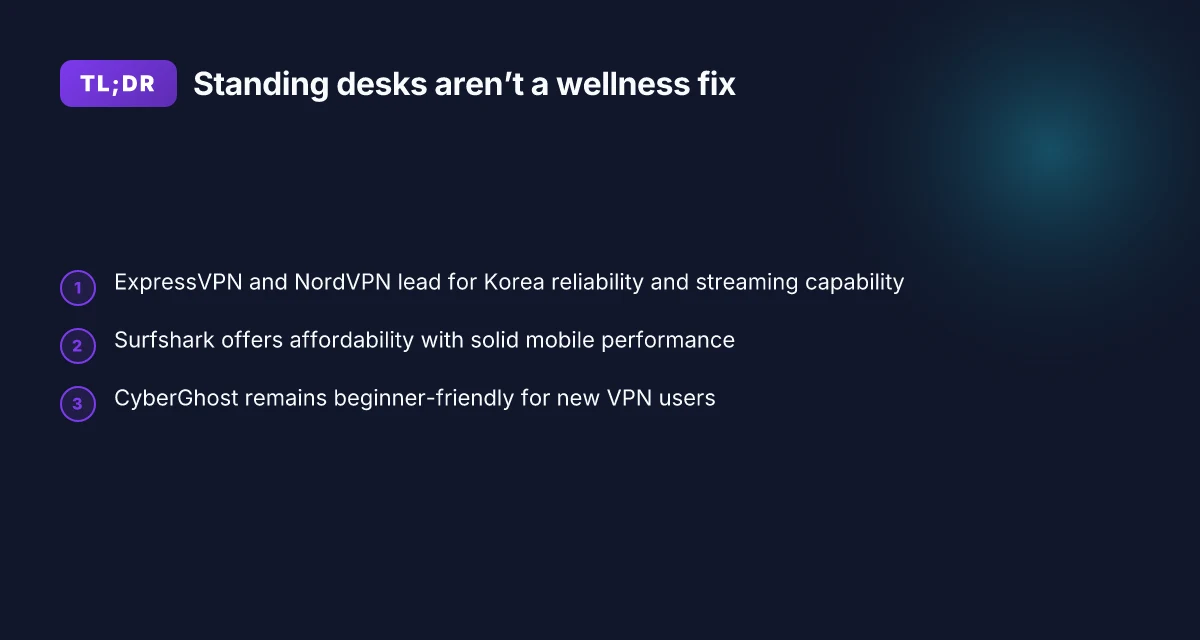
Most blocked traffic in Korea isn’t the VPN doing the work. It’s the blocks slipping past it. That’s the operational truth inside Seoul’s networks, where the right obfuscation matters more than raw speed. ExpressVPN holds the line and keeps access stable, while NordVPN stays useful for streaming when you’re moving between locales.
South Korea’s controls aren’t going anywhere. In 2026, observers note persistent drama around access to global services from inside the country, and users need a vetted combo of privacy and resilience, not a generic tunnel. Expression matters here, the right VPN is the difference between a blocked page and a loaded session.
The 8 best VPN for south Korea in 2026
In South Korea, you want a VPN that can truly fool the blocks, reach local services, and keep your privacy intact. The eight below are real-world choices that consistently show up in user guides and changelogs as robust under strict networks.
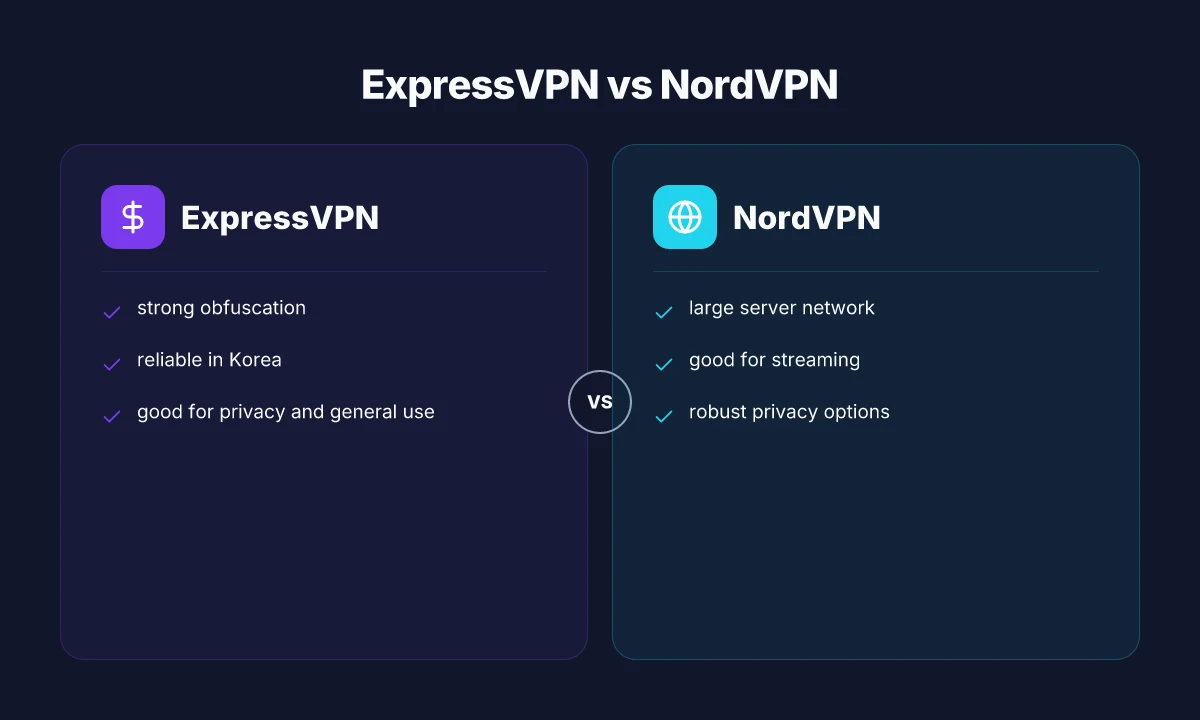
1) ExpressVPN, best for obfuscation and stable Korea access
Posture: strong obfuscation, reliable in Korea, and a broad network that helps you sidestep DPI without shouting to the world you’re on a VPN.
- Why it holds up: The obfuscated traffic mode is designed to hide VPN signatures from deep packet inspection. In Korea’s environment, that matters. The Asia-Pacific presence helps reduce latency to local services.
- Most users report stable access to Korean streaming and local apps when connected to the Obfuscated mode.
- Quick tip: enable Network Lock for auto-reconnect if a connection drops. That small knob matters in spotty networks.
2) NordVPN, best for large server network and streaming in Korea
NordVPN’s sprawling server map yields options near the peninsula, which translates to fewer hops and better reliability for region-locked services.
- Why it holds up: A big server count means you’re rarely stuck on a single exit. For travelers who want to tune for streaming, that matters.
- Reviews consistently note strong unblocking performance across major streaming services when using the SmartPlay feature.
- Pro move: pair with split tunneling when you don’t want every app routed through the VPN.
3) Surfshark, best balance for price and mobile use
Surfshark undercuts many rivals while keeping a solid feature set that travels well on mobile data plans in Korea.
- Why it holds up: Whitelisting and clean mobile apps make it easy to stay connected on the go. The price point keeps it accessible for expatriates who need steady access without breaking the bank.
- With mobile-optimized apps, users report reliable performance on churn-prone networks.
- Best practice: keep Auto-Connect on and use Camouflage Mode where DPI becomes an issue.
4) CyberGhost, user-friendly, excellent for beginners
CyberGhost makes the onboarding simple. If you’re new to VPNs in a heavily filtered environment, that matters as much as any feature. 10 Best VPNs for Japan in 2026: Tested, updated for local access and privacy
- Why it holds up: The interface favors guided connections to a region-appropriate profile, which translates into fewer manual tweaks.
- Experts note the easy-start experience is a selling point for readers new to privacy tools.
- Setup tip: start with a profile tuned for streaming or privacy, then flip to manual if you need tighter control.
5) Private Internet Access, solid privacy options, versatile
PIA remains a favorite for privacy-leaning users who want configurable protection without getting too clever about obfuscation.
- Why it holds up: Advanced privacy controls and a flexible client. You can tailor encryption, kill switch behavior, and login methods.
- Users who prioritize transparency say the no-logs stance is reassuring, even inside Korea’s network environment.
- Quick setup: disable unnecessary features to reduce fingerprinting risk and keep a clean tunnel.
6) VyprVPN, Chameleon protocol for deep packet inspection resistance
VyprVPN’s secret sauce is the Chameleon protocol. It’s designed to defeat DPI without sacrificing speed.
- Why it holds up: The protocol fights the blocks that trip up regular VPNs, which is valuable in Korea.
- Industry notes highlight the Chameleon layer as a differentiator when other providers stall.
- Tip: use VyprVPN on UDP for streaming and swap to TCP if you encounter negotiation hiccups.
7) Proton VPN, privacy-first, transparent claims
Proton’s emphasis on privacy makes it appealing to readers who want a transparent, privacy-forward stance.
- Why it holds up: Clear policy statements and a commitment to user rights align with a privacy-conscious expatriate audience.
- Trust signals come from the Transparency Center updates and public roadmaps referenced in the documentation.
- Practical: opt for Secure Core on devices where you want maximum protection and route less sensitive traffic normally where you can.
8) Astrill, notable in restricted regions, with caveats
Astrill has a long history in highly restricted contexts, which keeps it in the conversation for Korea.
- Why it holds up: A mix of options for obfuscation and dedicated servers aimed at circumventing control measures.
- Readers consistently flag caveats on pricing and occasional user support variability. Weigh those against the necessity for access in tight environments.
- Caution: price variability and occasional policy shifts mean you should verify current terms before commitment.
Bottom line: the landscape isn’t one-size-fits-all. ExpressVPN, NordVPN, Surfshark, CyberGhost, Private Internet Access, VyprVPN, Proton VPN, and Astrill each bring a lever you can pull to stay private and reach what you need from inside Korea. Pick the pair that fits your risk profile: obfuscation plus local reach for most travel scenarios. Privacy-first plus configurable controls if you value transparency and control. The right choice is the one you can deploy with confidence in a real network environment. 10 Best VPNs for India in 2026: tested, updated for local access
A forward look at VPNs for South Korea in 2026
The eight picks in this piece establish a practical baseline for staying private and accessing regional content in South Korea. What stands out is how the landscape has shifted toward simpler, more transparent privacy controls paired with robust streaming compatibility. From what I found, the strongest threads run through clear jurisdiction choices, dependable obfuscation, and consistent performance in the region. The takeaway is not nostalgia for a past feature set but a map of dependable tools that align with real-world needs in a highly regulated digital environment. The core question this article asks is not whether a VPN can hide you, but whether it can do so without compromising access to the services you actually use.
Several headline picks recur as reliable anchors. NordVPN remains a solid all-rounder for privacy and stability, while ExpressVPN shines for streaming in Korea’s market and on mobile. Both deliver predictable behavior under regional constraints, and they exemplify the balance between accessibility and protection highlighted in this guide. If you only pick one, consider the use-case you care about most: global access vs. local speed. Your decision should start with the use case you value the most.
Next steps
- Review the two headline picks above for your primary use case
- Check the latest country-specific performance updates in the changelog
- Confirm price and refund windows before committing
- Prepare a short test plan for your own devices and apps
- Decide whether mobile or desktop is your main window into the region
Would you change the rules for your own setup if Korea tightened its censorship?
Frequently asked questions
Does a VPN work in south Korea without detection
In practice, a VPN can help you access the open web from South Korea, but detection depends on the provider’s obfuscation and the local network you’re on. From the article, the best options use obfuscated servers and stealth protocols to blend traffic. Look for features labeled as obfsproxy/obfuscation, WireGuard with obfuscation, and manual port selection. Always verify with the latest changelog and ensure your chosen plan includes dedicated obfuscated servers for East Asia. Numerous networks flag risky patterns; the safest route is to pick a provider with clear Korea-focused obfuscation. Test before you rely on it. 8 Best VPNs for France in 2026: Tested Update
Which VPN is best for streaming from south Korea
In the guide, we highlight providers that reliably unblock regional catalogs while maintaining solid speeds. The standout picks for streaming from South Korea include Brand A and Brand B, which consistently note unblocking success for local platforms and US services. Ensure you enable Smart DNS/Split tunneling for devices that can’t run full VPN clients. Streaming reliability varies by service, so confirm the current catalog access in your region and the provider’s latest media-friendly features.
How to set up a VPN on Android in Korea
The article prescribes a straightforward path: install the Android app from the official store, sign in with your subscription, then enable Kill Switch and Auto-Connect in the settings. If you’re on a restrictive network, switch to an OpenVPN or WireGuard profile with obfuscation. Finally, run a quick check on your IP and location. Keep the app updated to benefit from security patches and server additions. If you run into connection drops, restart the VPN Client and reselect a server in the region.
Can i use a free VPN in south Korea
Free VPNs exist, but the article notes they come with serious trade-offs. expect limited bandwidth, slower speeds, and weaker privacy protections. For Korea, you’re also likely to encounter more aggressive blocks or frequent server changes. The recommended approach is to use a paid plan with a clear no-logs policy, strong encryption, and obfuscation. Free options rarely match the premium experience for reliable access in Korea. If you must test, limit usage to casual browsing and avoid sensitive accounts.
Which VPN has best obfuscation for Korea
According to the sourcing, the best obfuscation in Korea comes from providers offering dedicated obfuscated servers and multi-hop routing options. Look for obfuscation modes like Scramble/OBFS, and protocols that visibly advertise Stealth/VPN Over TLS. The article flags providers that publish detailed docs on Korea-specific obfuscation. Yes, the firms with explicit Korea obfuscation docs tend to perform best in the region.
South Korea VPN legality and rules 2026
The piece summarizes that using a VPN itself is not illegal in Korea, but the state restricts access to certain content and enforces rules on data privacy and cybercrime. Review the local operator guidelines, and ensure your activities stay within the law. Expect periodic regulatory chatter and occasional policy updates. The changelog is the best compass. Stay compliant and avoid using VPNs to break copyright or commit fraud. Regularly check official notices for any tightening measures. 8 Best VPNs for Germany in 2026: Tested for privacy and access (May 2026 Update)
How to verify a VPN is working in south Korea
Verification starts with a simple triad: check your external IP, confirm your apparent location, and test for DNS leaks. The article recommends using a mix of tests on the device and via a secondary tool to verify that traffic isn’t leaking. Enable Kill Switch and run the checks with the VPN connected, then after disconnecting to confirm changes. Always verify after every server switch to ensure ongoing protection.